
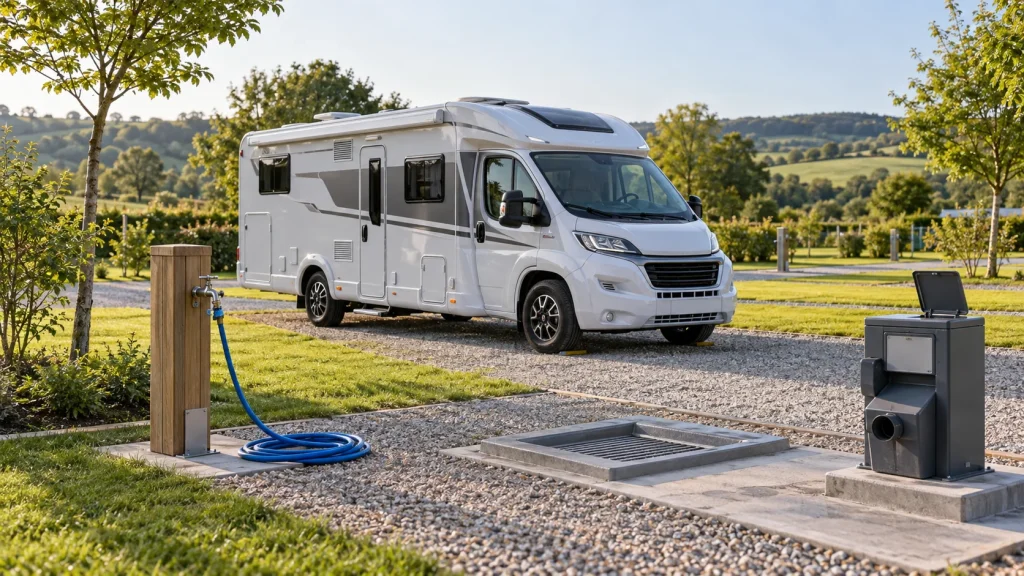
Arriving at a campsite is easier when you already know how much fresh water you have and where your wastewater will go. Motorhome arrival preparation is especially useful if you expect to reach the site outside reception hours: you may be able to park, but you should not assume that a filling point or disposal area will be accessible. A few checks before departure can spare you an awkward search after a long drive.
Check the site arrangements before you travel
Look up the campsite’s arrival instructions and confirm whether it has a designated fresh water tap, a grey water disposal point, and a toilet cassette emptying point. These are separate facilities, and availability varies. If the information is unclear, ask where each point is located, when it can be used, and whether you need an access code, token, or particular hose connection.
Check the route into the service area as well as the facilities themselves. A motorhome may need room to turn or line up over a drain. If you are arriving late, find out whether the service area is accessible after reception closes. When that cannot be confirmed, plan to arrive with enough water for your first evening and enough capacity in both waste containers to wait until morning.
Work out how much fresh water you need
Fresh water is for drinking, cooking, washing, and the motorhome’s plumbing, depending on your setup. Carrying a full tank may be convenient, but water adds weight. The right amount depends on the journey, the number of people on board, and when you can next refill. Check your vehicle’s loading guidance rather than assuming that a full tank is suitable for every trip.
Before leaving, inspect the filler cap, hose, and any fittings you use. A clean hose kept solely for drinking water helps prevent contamination from equipment used at waste points. If water has been sitting in the tank for a long time, follow your motorhome’s guidance for draining and cleaning the system before relying on it for drinking.
At the campsite, identify the tap intended for potable water. Do not fill from an unmarked tap simply because it is close to your pitch. Keep the hose end off the ground, avoid touching the tap outlet with it, and close the filler securely afterward. If the water’s drinking status is uncertain, ask the site before using it for food or drink.
Know which waste goes where
Motorhomes commonly hold two kinds of wastewater. Grey water comes from sinks and showers. Black waste is toilet waste, often carried in a removable cassette. Even when grey water looks fairly clear, it can contain soap, food residue, and grease. Neither type belongs on a pitch, in a roadside drain, or at a fresh water point.
Use the disposal point designated for each waste stream. A drive over drain may be intended for a fixed grey water tank, while a separate emptying station is provided for toilet cassettes. Signs and site instructions take priority over assumptions based on how a drain looks. Empty carefully, avoid splashes, and leave the area clean for the next person.
A common arrival mistake is to put off disposal because the tanks are not quite full. Imagine reaching a site after dinner with a nearly full grey water tank and discovering that its disposal point is closed overnight. Washing up and showering may then have to wait. Emptying at a suitable stop before the last leg can give you more flexibility, provided that stop accepts motorhome waste.
Make the service stop orderly
If the campsite has a shared service area, consider whether you need to fill or empty before parking on your pitch. Moving the motorhome again may be inconvenient once chairs, a cable, or an awning are set up. On the other hand, a long queue at arrival may make it more sensible to park first if your tanks have enough capacity. Follow the site’s traffic directions and avoid blocking access while preparing equipment.
A simple sequence helps keep clean and dirty tasks apart:
- Park where instructed and switch off the engine if appropriate.
- Locate the correct outlets and drains before opening any caps or valves.
- Empty toilet waste at its designated point, then grey water where permitted.
- Clean your hands and handle fresh water equipment separately.
- Refill the fresh water tank if needed, close every cap and valve, and check for leaks before moving.
The exact order may change with the layout of the service area. The key is to keep the drinking water hose away from waste equipment and to confirm that all drains and caps are closed before driving to your pitch.
For more detailed information on this topic, read our guide on How to Make the Most of Campsite Facilities During Your Holiday.
Prepare for an arrival outside reception hours
Late arrival changes the plan because you may have limited information and fewer accessible facilities. Save the booking details and arrival instructions where you can read them without a signal. Check the expected reception hours, the permitted parking area, and any instructions for locating your pitch. If your plans change during the journey, use the campsite’s stated contact method where available.
For example, a family arriving after reception closes might need water for drinks and breakfast, while the service area remains unavailable until morning. Bringing enough safe water for those immediate needs and leaving space in the waste tanks makes the first night manageable. It also avoids trying to use an unfamiliar disposal point in poor light.
Finish with a quick check
Before settling in, confirm your water level, waste capacity, and the location of the proper disposal points. During the stay, empty tanks before they become difficult to manage rather than waiting for an indicator to show full. Knowing the site’s arrangements and keeping fresh water equipment separate from waste equipment turns arrival into a straightforward routine, even when the timing is less than ideal.