
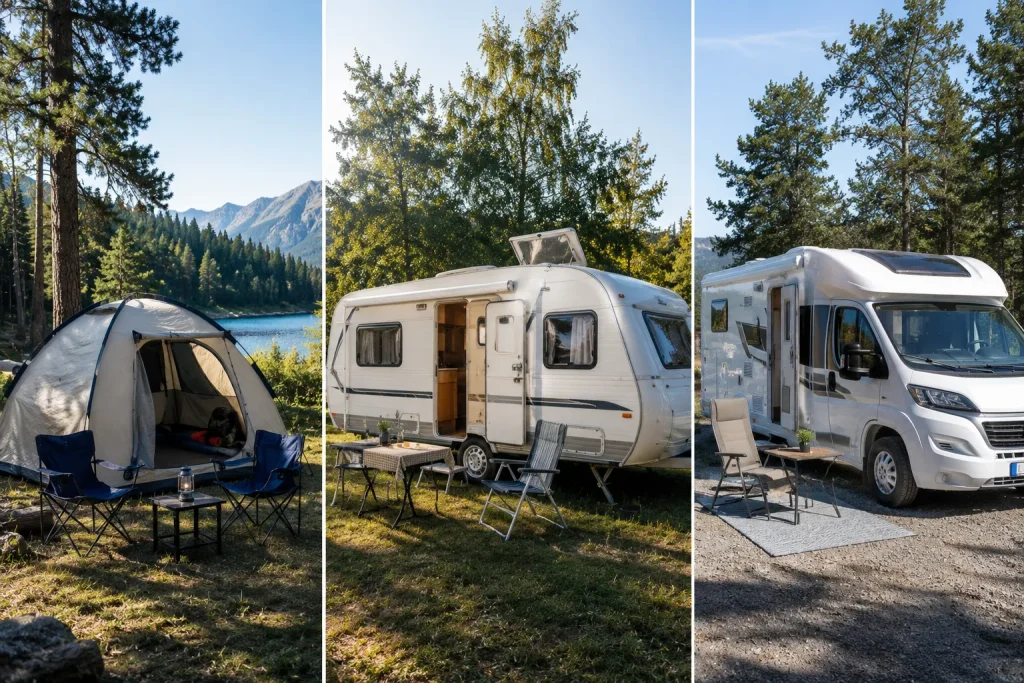
Camping offers flexibility, adventure, and a chance to enjoy the outdoors. In 2025, more than 92 million U.S. households participated in camping activities, according to outdoor industry data. Families, couples, and solo travelers continue to choose different ways to experience nature. The biggest decision often comes down to choosing between a tent, a caravan, or a motorhome.
Camping styles have changed significantly over the past decade. Modern campers seek comfort, convenience, and affordability. Each option provides unique advantages depending on budget, travel frequency, and personal preferences. Some travelers prefer the simplicity of tents, while others value the comfort of fully equipped motorhomes.
We have spent years comparing different Camping setups and speaking with experienced campers. Based on real-world experiences and industry trends, every option has strengths and weaknesses. Understanding those differences helps campers choose equipment that matches their lifestyle. Selecting the right setup can improve comfort, reduce expenses, and create better travel experiences.
Understanding the Three Main Camping Options
Tent Camping Offers Simplicity and Affordability
Tent Camping remains the most affordable way to enjoy nature. Entry-level family tents cost between $120 and $450. Premium four-season tents range from $600 to $1,500. Campground fees typically average $20 to $50 per night in the United States.
Experienced campers often recommend tents for beginners. Setup takes around 15 to 30 minutes. Lightweight equipment makes transportation easier. Tent Camping also provides greater access to remote locations and national parks.
Advantages include:
- Lower upfront costs.
- Easy storage at home.
- Better connection with nature.
- Suitable for weekend trips.
- Lower maintenance expenses.
However, weather conditions greatly affect comfort. Heavy rain, strong winds, and extreme temperatures can challenge inexperienced campers.
Caravan Camping Balances Comfort and Flexibility
Caravans provide a middle ground between traditional tents and motorhomes. New travel trailers generally cost between $25,000 and $80,000 in 2026. Used models are available from $10,000 onward.
Many experienced families prefer caravans because they combine home comforts with towing flexibility. Owners can unhitch the caravan and use the vehicle independently during excursions. Modern caravans include kitchens, bathrooms, heating systems, and sleeping areas.
Common features include:
- Indoor cooking facilities.
- Bathroom and shower options.
- Climate control systems.
- Larger sleeping capacity.
- Storage compartments.
Caravan Camping works particularly well for longer vacations. Towing requires practice, and storage space at home may become an issue. Maintenance expenses can also increase over time.
Why Motorhomes Appeal to Frequent Campers
Motorhomes Deliver Maximum Convenience
Motorhomes represent the most luxurious Camping experience. According to RV Industry Association figures, more than 11.2 million U.S. households own recreational vehicles. Demand continues to grow among retirees and remote workers.
New Class C motorhomes cost between $95,000 and $180,000. Larger Class A models often exceed $250,000. Despite higher prices, many travelers appreciate the convenience they provide.
Motorhomes offer:
- Full bathrooms and kitchens.
- Permanent beds.
- Heating and air conditioning.
- Entertainment systems.
- Self-contained water and power supplies.
Our experience with motorhome travel shows that setup time is minimal. Arriving at camp and preparing meals becomes much easier. Long-distance road trips also become more comfortable.
Fuel consumption remains a major drawback. Large motorhomes average 8 to 12 miles per gallon. Insurance and maintenance costs are also significantly higher.
Comparing Costs and Practicality
Choosing the Right Camping Option for Your Lifestyle
Budget, travel habits, and comfort expectations determine the best Camping setup. First-time campers often find tents sufficient. Families taking several annual vacations may benefit from caravans. Frequent travelers generally appreciate motorhomes.
| Feature | Tent | Caravan | Motorhome |
|---|---|---|---|
| Average Purchase Price | $120-$1,500 | $10,000-$80,000 | $95,000-$250,000+ |
| Setup Time | 15-30 minutes | 30-45 minutes | 10-20 minutes |
| Bathroom Included | No | Yes | Yes |
| Kitchen Facilities | Limited | Yes | Yes |
| Fuel Consumption Impact | Minimal | Moderate | High |
| Maintenance Costs | Low | Medium | High |
| Storage Requirements | Small | Moderate | Large |
| Ideal Trip Length | Weekend trips | 1-3 weeks | Extended travel |
Experienced campground operators often note that family size influences satisfaction levels. Couples frequently enjoy tent Camping. Larger families typically appreciate additional space offered by caravans and motorhomes.
Key considerations before buying include:
- Annual travel frequency.
- Total budget.
- Desired comfort level.
- Vehicle towing capacity.
- Storage availability.
- Maintenance commitment.
Travel experts recommend renting before purchasing. Renting allows campers to evaluate real-life usability before making a major investment. Start your journey with our guide to Camping.
Conclusion
Camping continues to evolve as travelers seek different levels of comfort and mobility. Tent Camping remains the most economical choice and suits outdoor enthusiasts who enjoy simplicity. Caravans provide a balanced combination of convenience and flexibility for growing families. Motorhomes deliver maximum comfort and work best for frequent travelers and extended adventures.
There is no universal answer because every traveler has different priorities. Our experience shows that the best Camping option depends on how often you travel, your budget, and the type of experience you want. Understanding the strengths and limitations of each option helps create more enjoyable and memorable outdoor adventures.