
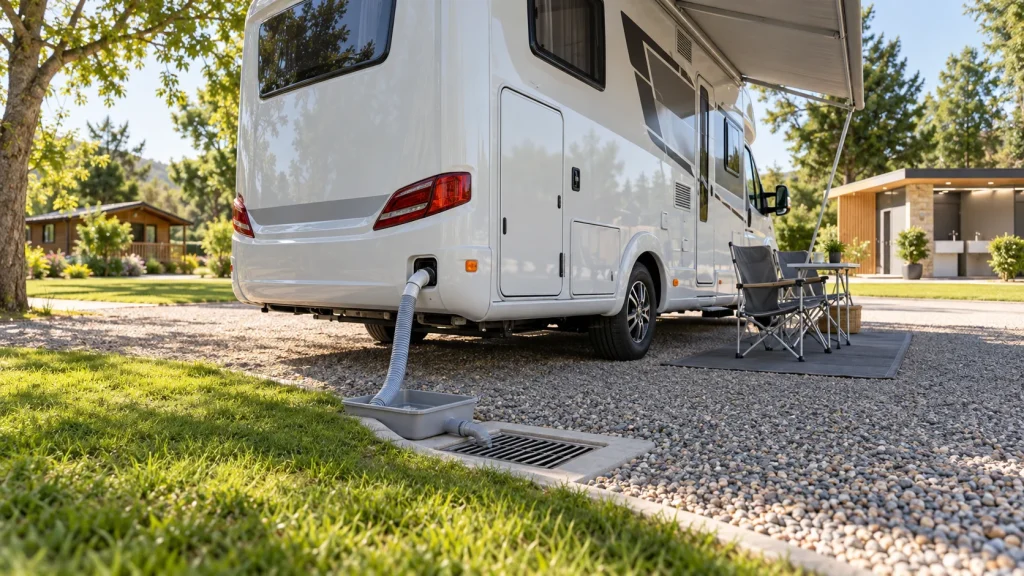
A motorhome’s greywater tank can fill faster than expected during a stay, especially when several people are washing dishes and using the sink. If there is no suitable place to empty it nearby, a routine chore becomes a problem. Solving greywater disposal problems starts with knowing what the tank holds, finding an approved disposal point, and changing water use until you can reach it.
Know what you are emptying
Greywater is used water from sinks and, in some motorhomes, showers. It is separate from toilet waste, often called blackwater. That distinction matters because disposal points may be designed for one type of waste or may have different instructions for each. Check your motorhome’s layout if you are unsure which outlet drains which tank.
Greywater may contain food particles, grease, soap and cleaning products. Even when it looks relatively clear, it should go to a designated disposal facility. Emptying it onto the ground, into a roadside drain or into a watercourse can create problems for other people and the surrounding area. A nearby drain is not automatically an appropriate one.
Find the right disposal point before the tank is full
At a campsite, ask where motorhome greywater should be emptied and how the facility is used. Some disposal points allow a vehicle to drive over a drain; others require a hose or a portable container. Check the access route as well as the drain itself. A motorhome that cannot comfortably reach the point may need a different method.
If you are staying somewhere without a suitable facility, identify another approved motorhome service point before the tank reaches capacity. Confirm that it accepts greywater and that your vehicle can use it. Opening hours, access restrictions and payment arrangements can vary. This is particularly useful to check before a long stay or a travel day with few planned stops.
For example, a family arriving for several nights might discover that the greywater point is across the site and cannot be reached without moving the motorhome. Knowing this on arrival lets them decide whether a suitable portable container is practical, or whether they should empty the tank when they next take the vehicle out. Waiting until water backs up into the shower tray leaves fewer comfortable options.
Empty the tank without making a mess
Before opening the outlet, position the vehicle or approved container so the water will enter the disposal point. If you need a hose, check that it fits securely and reaches without stretching across a walkway. Open the valve slowly at first; this gives you a chance to spot a poor connection or unexpected flow.
A simple routine helps:
- Follow any instructions posted at the disposal point, including which inlet to use.
- Keep the outlet, hose or container over the drain throughout emptying.
- Close the valve fully before moving the vehicle or removing the hose.
- Rinse the area and your equipment where the facility permits it, then wash your hands.
Do not leave a hose in a position where someone could trip over it. Keep equipment used for greywater separate from equipment used to fill the fresh water tank. If the disposal point is occupied or awkward to approach, waiting for space is usually easier than trying to empty the tank from an unsuitable position.
What to do when the tank seems full too soon
First, reduce water entering the tank. Turn off the tap while soaping dishes, use a bowl for washing up where appropriate, and avoid letting food scraps go down the sink. If showers drain into the tank, using an available sanitary facility may give you more time to reach a disposal point. These steps manage capacity; they do not replace emptying the tank.
A tank that appears to fill unusually quickly may also need a closer look. Check whether a tap is dripping, whether all fixtures drain into the greywater tank, and whether the level gauge changes after the tank has been emptied. Tank indicators can give misleading readings when residue builds up, so an unexpected reading is worth checking against what you have actually used and drained.
If water drains slowly from a sink or shower while the tank is not full, the issue may be a blocked strainer, hose or pipe. Remove accessible food debris from strainers and follow the motorhome manufacturer’s guidance for cleaning the drainage system. Avoid forcing a blockage with a chemical product unless it is suitable for the vehicle’s plumbing and tank.
For more detailed information on this topic, read our guide on Motorhome Arrival Preparation: Fresh Water and Waste Disposal.
Prevent repeat problems during longer stays
Make disposal part of your stay routine rather than a task saved for departure. The useful interval depends on tank size, how many people are aboard, and how much water they use. Check the level regularly and empty the tank when you have convenient access to an approved point, even if it is not full.
Small habits also help keep the system easier to use. Scrape plates before washing them so food does not collect in the tank. Wipe heavy grease from pans before they reach the sink. Use cleaning products according to their labels and the motorhome’s guidance, particularly if wastewater will be handled through a campsite facility. Periodic cleaning can help with odours and residue, but it cannot fix a damaged valve or leaking connection.
If you notice a leak beneath the motorhome, a valve that will not close, or water backing up despite an empty tank, stop using the affected fixture until the cause is clear. Catching escaping water and arranging an appropriate repair is more sensible than continuing to fill a faulty system.
Greywater disposal is easiest when the method is settled early in the stay. Locate an approved point, check how your motorhome can reach it, and keep enough capacity for normal washing between visits. When a problem arises, managing water use and checking the tank and drainage system will help you choose the next practical step.